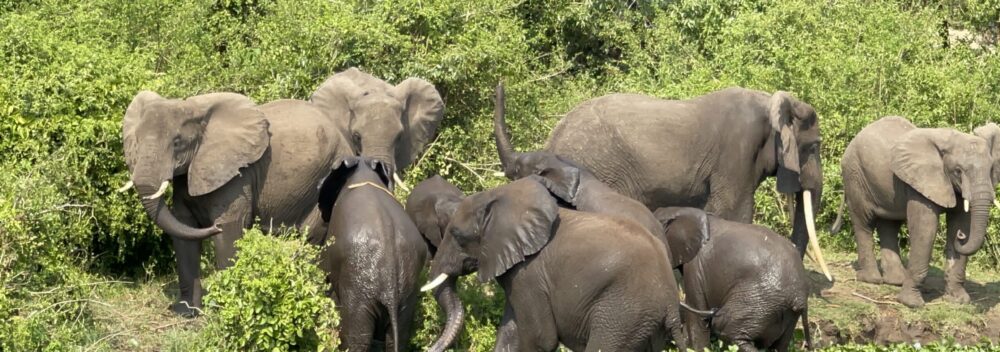

Wildlife and humans have coexisted since creation. For Christians, humans were given the responsibility to steward the earth, including its conservation and renewal, rather than its depletion and destruction.
Uganda is home to many of the world’s well-known wildlife species, including iconic African mammals such as elephants and rhinos, as well as pangolins, which are currently believed to be the most trafficked mammals globally, and other small wildlife species and aquatic life. Uganda is a party to international and regional conventions that protect wildlife and has enacted laws that prohibit wildlife crime. There are also important efforts dedicated to enforcing the law protecting wildlife in Uganda.
It is estimated that half of Uganda’s wildlife resides outside the gazetted National Parks and Wildlife Reserves, often sharing habitats with people on private or community land. Therefore, rural communities are the stewards of Uganda’s wildlife, serving as its “keepers” and shouldering the burdens of living with wildlife. However, the high degree of coexistence between humans and wild animals in Uganda presents significant challenges. The growing human population has led to increased human-wildlife conflict over space, food, and other resources. These, combined with ignorance of the law and the value of wildlife, as well as high poverty levels, threaten the existence of wildlife. Rural people are involved in the destruction of wildlife in their areas and are often used by kingpins to engage in wildlife crime. These factors have led to the loss of lives and increased rates of wildlife crime in the country.
While there are efforts to enforce the law protecting wildlife in Uganda, arrests, prosecutions, and incarcerations of rural people for wildlife crime are only part of the solution and, to some extent, may threaten the very survival of wildlife. By the time wildlife crime is reported, it is too late. It’s too late because life is lost. In addition, as a result of the crime, families and communities at large are destabilized when family members, who may at times be the sole breadwinners for their families, are withdrawn from the communities and incarcerated, which may create bigger future threats for the animals in their communities.
Conserving wildlife, therefore, calls for partnerships with communities. Thus, when communities are not involved in conservation, all conservation efforts are in vain.
Help African Animals is influenced by the belief that unless people understand, they will not care, and unless they care, they will not help. Therefore, unless rural people understand the need to protect wildlife, they will not protect it. Knowledge of the need to protect animals fosters respect and proper enforcement of laws, thereby saving animal lives.
Recognizing the role of communities in wildlife protection, Help African Animals is conducting community outreaches in wildlife crime hotspots in Uganda to sensitize rural communities about the need to conserve wildlife in their areas, the laws that protect wildlife, and alternatives to poaching.
Between January and April 2026, Help African Animals held four community outreaches in Kinyogoga, Ngoma, Wakyato, and Nabisojjo in Nakaseke District, Uganda. These four areas are among the district’s wildlife crime hotspots. During these outreaches, we met with rural people, including hunters, and their local leaders. We educated them on the need to protect wildlife in their communities, the laws that protect wildlife, and the consequences of violating those laws. We also educated rural people on alternatives to poaching that help them acquire new skills to generate income and enhance food production, rather than focusing on wildlife as the only source of income and livelihood.
At three of the meetings, we were joined by Members of Parliament from the three areas. On January 10th, while in Kinyogoga sub-county, we were joined by the Honorable Professor Wilber Ahebwa, Member of Parliament for Nakaseke North Constituency. On April 25th, while in Wakyato and Kinoni, we were joined by the Honorable Joseph Kyofatogabye Kabuye, the Minister of State for Kampala Capital City and Metropolitan Affairs and Member of Parliament for Nakaseke Central Constituency. The two Members of Parliament also joined us in educating the people.


One of the most impactful aspects of the community meetings was the attendance of three wildlife crime ex-convicts. All three spoke at the meetings about their prior offences and they educated the community about the importance of not violating wildlife laws. Two were arrested in 2022 for unlawful possession of bush meat. They were sentenced to three (3) years’ imprisonment. The third was arrested in 2018, also for unlawful possession of bush meat. He was also sentenced to three (3) years’ imprisonment. All three men shared with the people their experiences in prison and the challenges they encountered as a result of the incarcerations. They encouraged rural people to avoid wildlife crime and assured them that it is possible to survive without bush meat. They confessed that they were no longer eating bush meat, and yet they were surviving well. They specifically called on other youths to pursue other legal means of survival.


Saving wild animals in Uganda calls for more proactive interventions that prevent their killing and protect them and the people. Interventions that save lives not only save the animals and people but also save the government from the huge costs associated with arrests, investigations, trials, and the incarceration of wildlife offenders and prevent future threats to the animals that would arise from the communities where the animals live, thereby promoting coexistence.