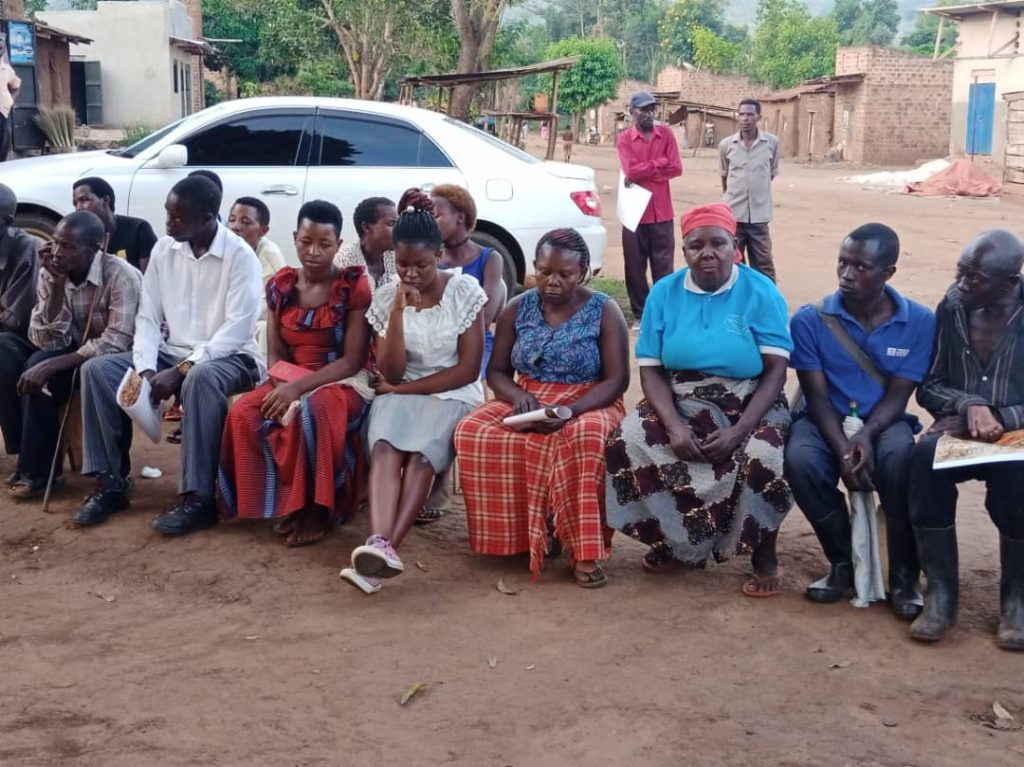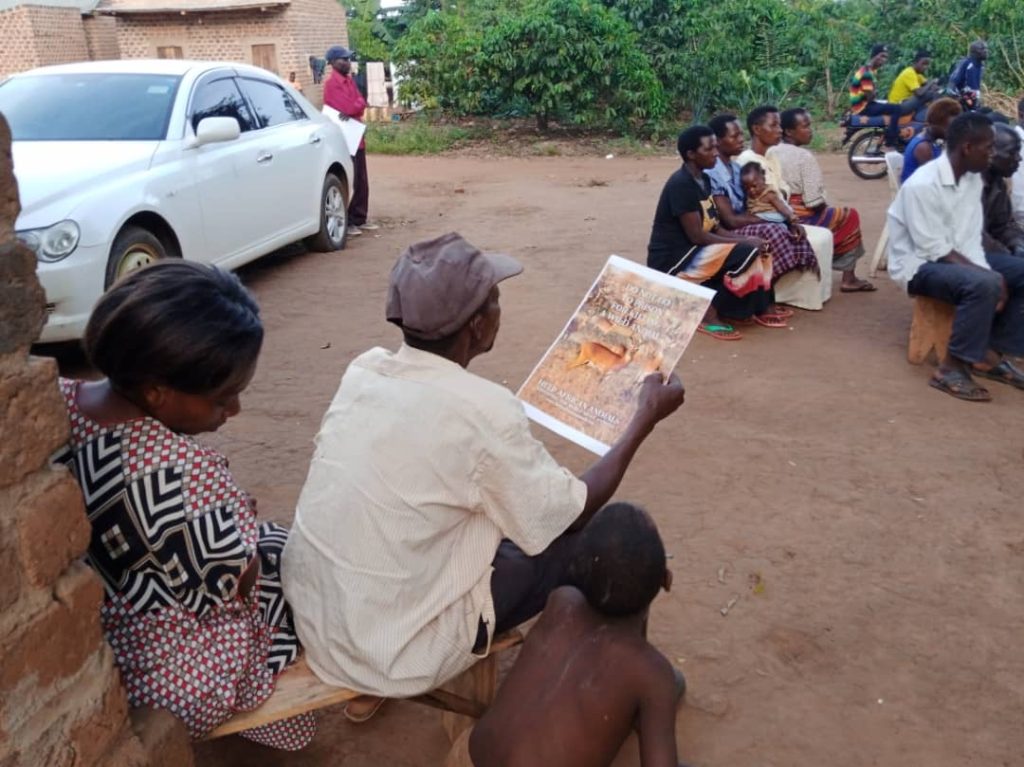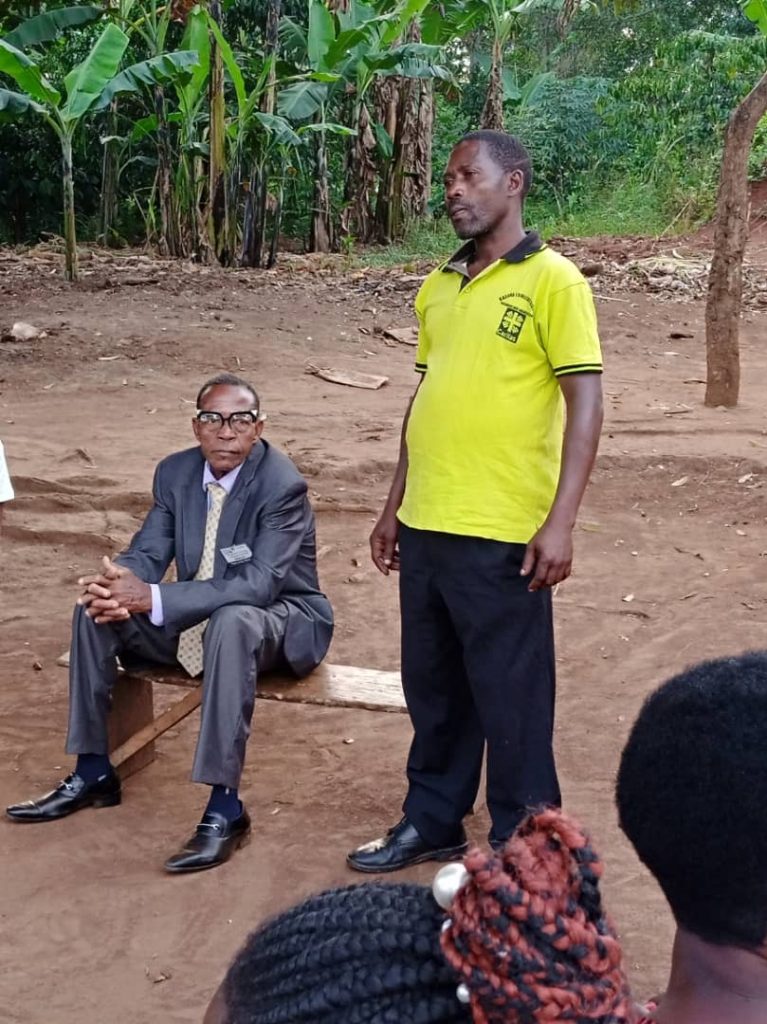
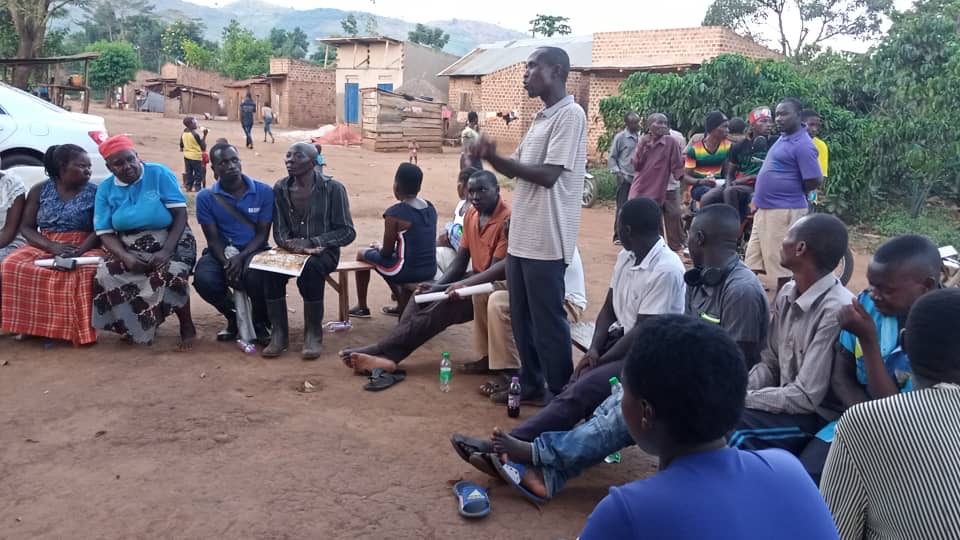
A community member raising a concern during the meeting about the increase of monkeys in their area
The interaction between wild animals and humans, and the resultant negative impact on people, animals, resources, and habitats have increased over time. Uganda like many other African countries continues to face the problem. As human populations expand and natural habitats shrink, people and animals increasingly come into conflict over space and food. The animals, many of which are already endangered, are often killed in retaliation or to prevent future conflicts.
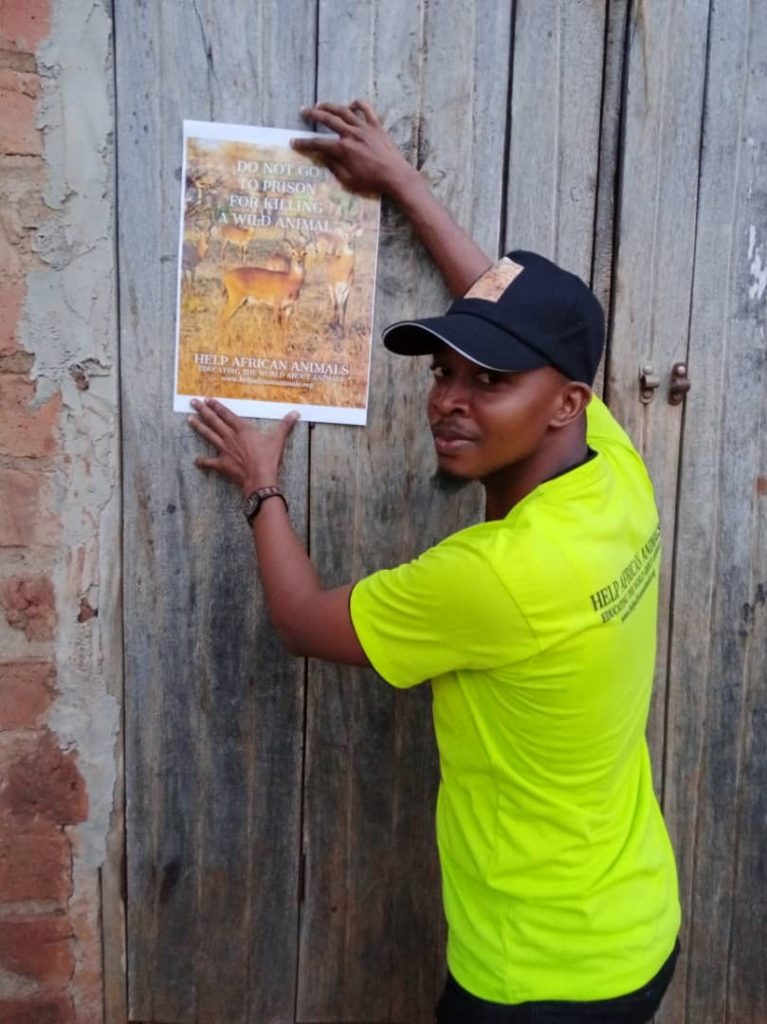
During the educational campaign conducted by Help African Animals in one of the rural villages in Kapeeka sub-county, Nakaseke district of Uganda, the gentleman standing in the captioned photograph raised a concern about the increased number of monkeys in the community that were destroying their crops. How does one react to monkeys in their garden? Imagine how monkeys run and jump up and down on top trees!
The gentleman was of the view that it was easier for him to poison the monkeys than lose his crops on which he survived with his family members. He, however, feared that if his luck ran out and he got arrested, then that would be too bad for him and his family since he had no money for transport to go to report the problem to district wildlife officers. Our trip was a success! By the end of the campaign, his attitude had changed, a solution had been provided and monkeys were saved.