Category Archives: Uncategorized
Fighting wildlife crime through education
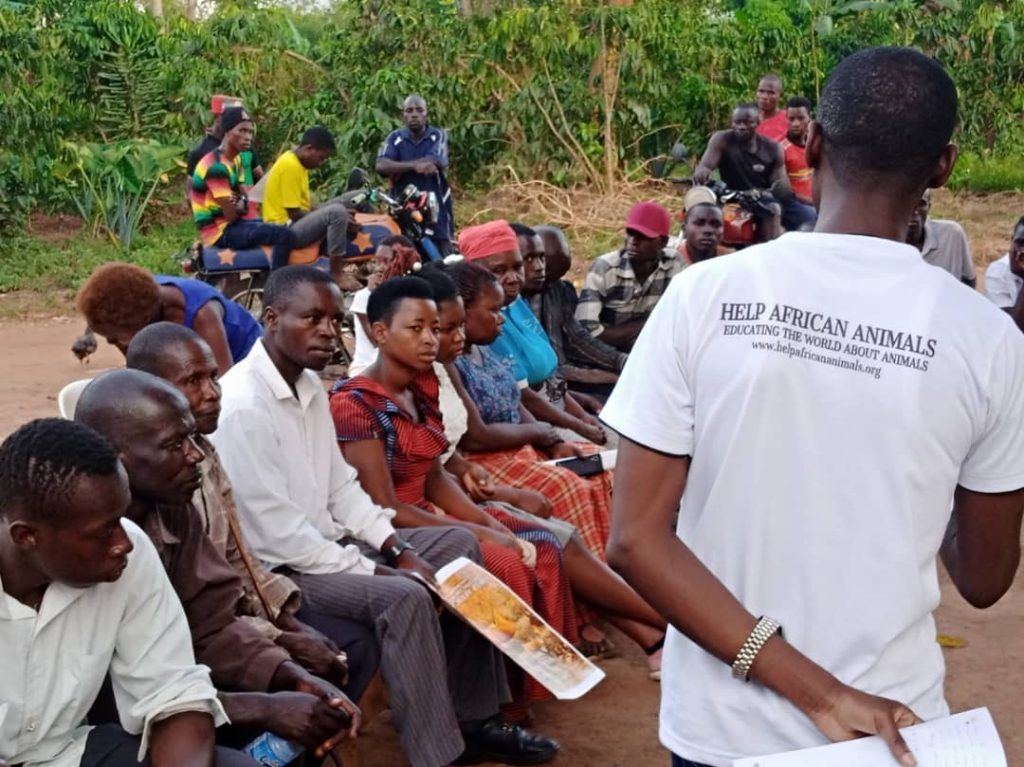
A volunteer of Help African Animals educating rural people in a Community Wildlife Talk held at Kapeeka sub-county, Nakaseke district of Uganda
In Uganda, rural people and animals live in the same ecosystem. The struggle for space and food between animals and humans is still a huge problem in Uganda. With all the dangers associated with living with wildlife, people regard wildlife as enemies which they must eliminate. Rural people are ignorant of the importance of conservation and the laws protecting wildlife. Out of ignorance, they kill animals which has sent many species of wildlife into extinction.
Rural people are also increasingly used by traffickers in the illegal wildlife trade. They are paid to kill the animals or used in the transportation of the protected species within the country and across borders. Rural people benefit less from illegal wildlife trade because they do not know the value of wildlife. Sadly, they are the ones who many times end up being arrested with the species and charged. They are shocked to learn that the species they killed/possessed are highly endangered/protected and that the offenses attract penalties of up to life imprisonment.
Having different individuals in the community to attend the education campaign was a great idea. Community members had a chance to learned that wildlife on their land or in their community is not theirs to kill/eat/destroy. They learned the importance of protecting wildlife, how to protect wildlife in their community, to identify wildlife crime and report it, the laws protecting wildlife, and penalties for violation of the laws.
Help African Animals is driven by the belief that unless people understand the dangers of killing/destroying wildlife, they will not care to conserve it and unless they care, they won’t help to support or participate in conservation efforts/programs. Animals don’t speak. Let us speak for them.
Women play a role in the fight against animal-related crimes

Women and men interact with biodiversity and natural resources in different ways according to their socially assigned gender roles, and thus have different knowledge, needs, and perspectives. Women may use certain natural resources more than men, and vice versa. In rural settings, women and children interact more with animals. They keep and care for animals more than men.
Today, women participate or are used in wildlife crime either knowingly or unknowingly. In many rural areas in Uganda, women are highly involved in charcoal burning, stone quarrying and fishing of immature fish. The leading cause of this has been mainly subsistence. Many women are single mothers/widows with children that they provide for single-handedly. They resort to the illegal harvest of the resources and destruction of habitats for animals.
Help African Animals deliberately targeted women and involved them in the education campaign. This followed our realization that women’s active participation in natural resource management leads to better conservation outcomes. Women are naturally strict in compliance and practice greater transparency and accountability.
Mothers help in the fight against wildlife crime
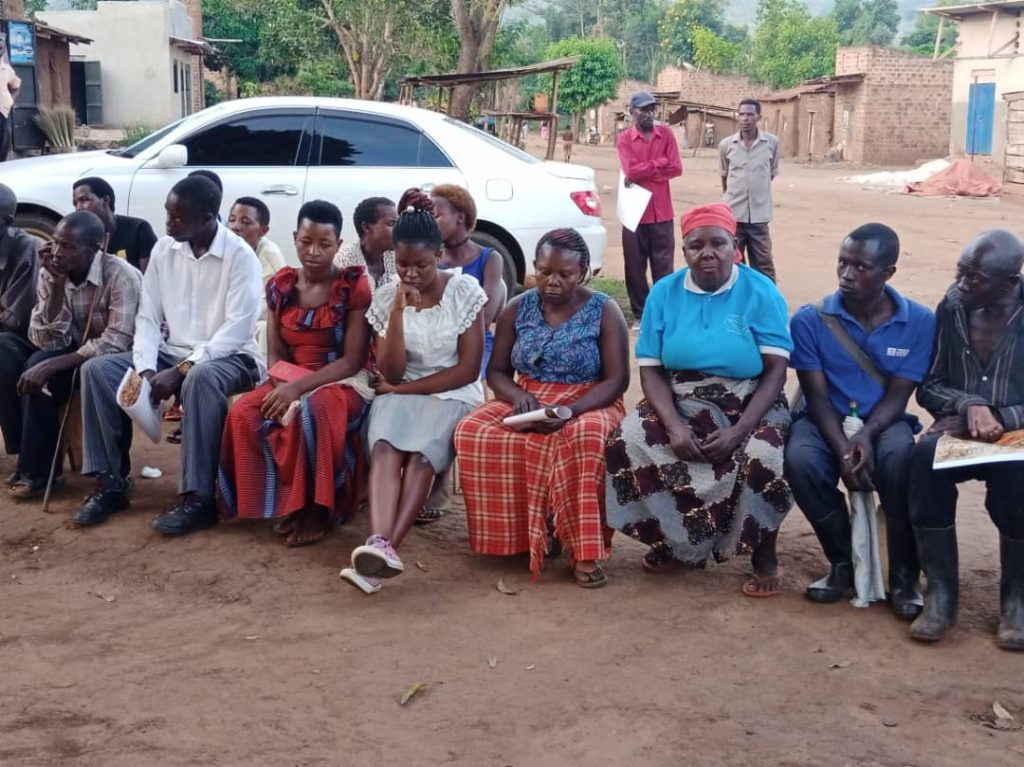
Mothers listening attentively to a volunteer of Help African Animals
Mothers are the ones who give birth to hunters. They suffer more when their children are imprisoned for hunting/killing wildlife. Help African Animals targeted mothers and had them in attendance in their education campaign. When mothers are educated about the dangers of hunting/killing wildlife, they prevail over their children and/or train them not to hunt/kill wildlife.
Our first poster
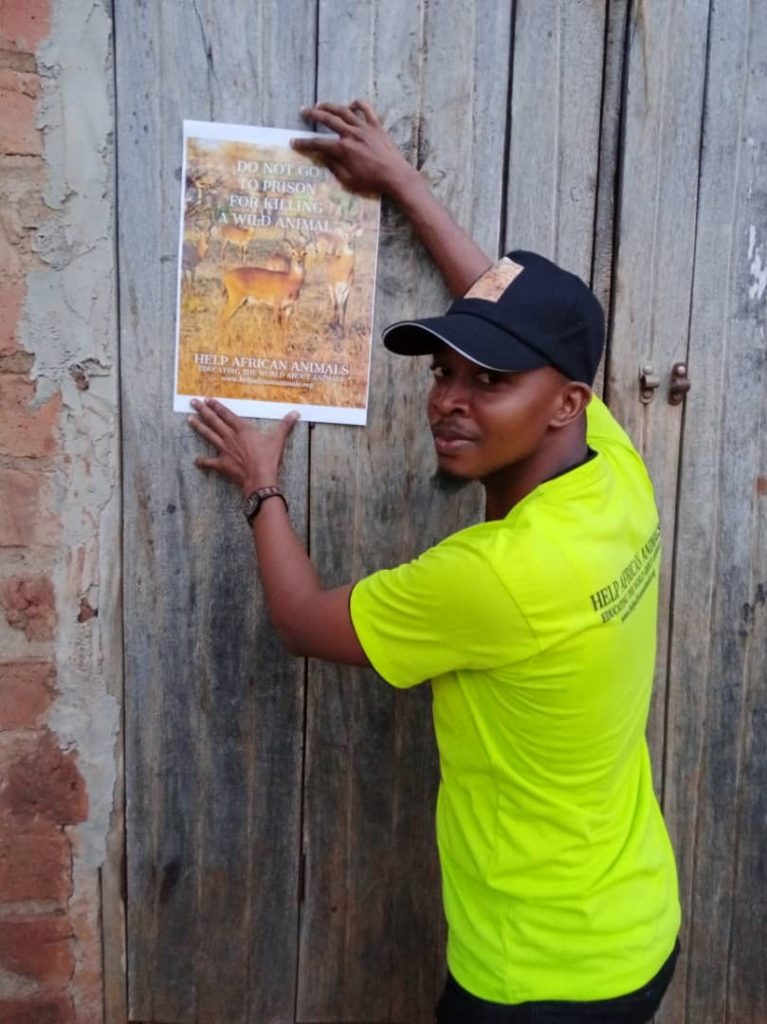
Educating young ones through their parents
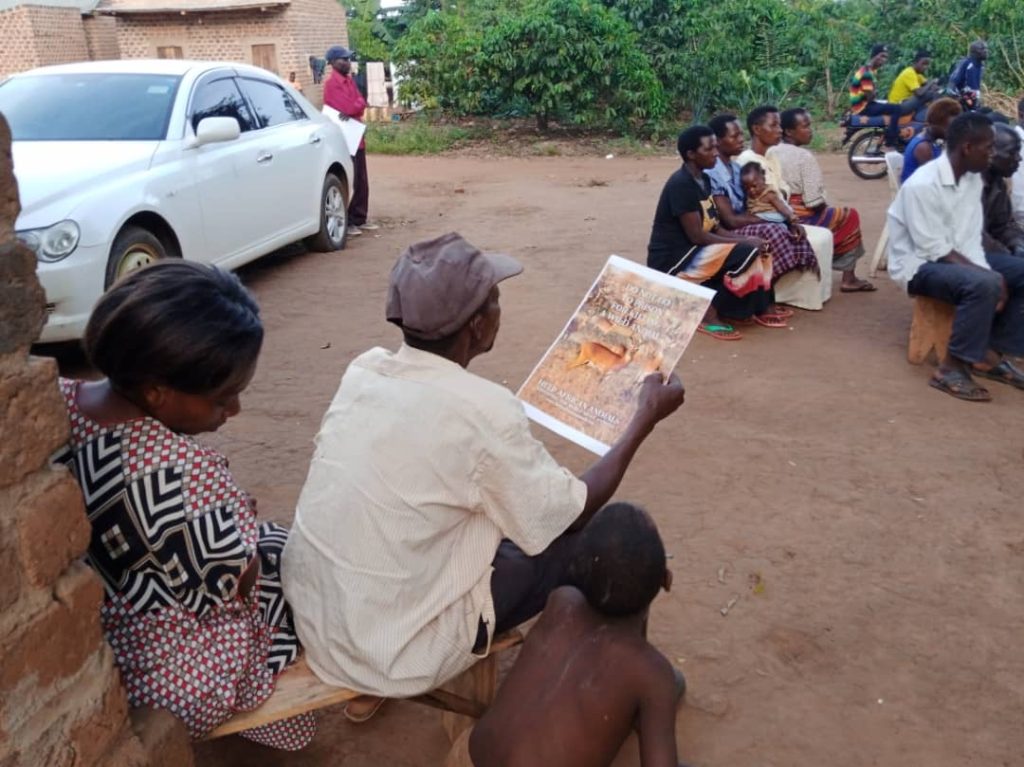
We are educating all generations. This is father and son reading Help African Animals poster. The young one will grow up sensitized about the need to conserve wildlife. Hunting is normally generational. If a father is a hunter, there is a high likelihood of his children hunting. When sensitized early, the young ones grow up to know that they need to conserve wildlife.